Non-Medical Mental Health Professional (Advanced Diploma) ·
Heilpraktikerin (Gebiet Psychotherapie) · Hannover-Kleefeld
Integrative Psychotherapy &
Counselling
A confidential space away from your everyday life —
for crises, anxiety, bereavement and life's bigger transitions.
Working in English as well as in German.
Non-Medical Mental Health Professional (Advanced Diploma) ·
Heilpraktikerin (Gebiet Psychotherapie) · Hannover-Kleefeld
Integrative Psychotherapy &
Counselling
A confidential space away from your everyday life —
for crises, anxiety, bereavement and life's bigger transitions.
Working in English as well as in German.
English Language Counselling / Counselling for Expats
If you are new to Germany you may find it quite hard to learn the language. Not knowing a language may lead to difficult feelings of displacement or low self esteem. These can also be discussed during the counselling sessions. Psychotherapy (as well as counselling) in my experience works well even when English (or German) is your second language.
How I Work
Integrative Psychotherapy & Counselling
In difficult situations at work, in your studies or in family life, it can help to look for support outside your own network — with someone who is not part of your world, and who is bound to confidentiality.
Integrative Approach
Integrative psychotherapy combines theoretical ideas and practical tools from different therapeutic schools to meet each client’s individual needs. My basic orientation is analytic, but I am also trained to work humanistically and draw on body-based and CBT interventions. More recently, I have integrated mindfulness into my work. In it all, I aim above everything to stay attuned to your own process.
Culturally Sensitive Counseling
I am striving to be mindful of cultural differences and respectful of religious beliefs. After nearly twenty years in London, I have personal experience with leaving my own country—and have been actively involved in interfaith dialogue for years.
Grief Counselling
Grief often brings a mix of conflicting feelings — sadness, anger, relief, gratitude. It’s normal not to function as usual for a while. Grieving is part of being human, and it’s alright not to be alright. I support you through this time, drawing partly on my own experience as a hospital and mental health chaplain.
Counselling for Parents
Becoming a parent often reactivates unhelpful patterns from our own childhood. Therapy helps you find new ways of relating to yourself and to your children.
Online Sessions
I also offer online sessions, using data-protection-compliant software (therapie.de). In my experience, therapeutic work can be done very effectively in video format too.
Couples Counselling
Couples work is time-limited (around 3–10 sessions), aiming to work through conflict and improve communication in the relationship.
News
When Therapy Can Help
Depression, anxiety and traumatic experiences (such as war, or childhood neglect) are common reasons to seek therapeutic help. Big life transitions — training, studying, becoming a parent yourself — can also bring challenges where talking to someone outside your own world provides relief.
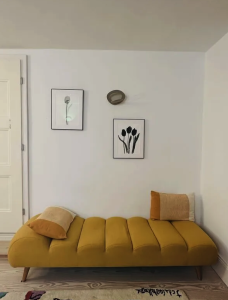

Dr. theol. Uta Blohm
Non-Medical Mental Health Professional · Heilpraktikerin (Gebiet Psychotherapie)
Life brings many challenges, and it’s understandable to look for support in facing them. I offer a non-judgemental space to talk about what’s happening in your life — it can help to speak to someone outside your own network.
Training in London Between 2006 and 2012 I trained in Integrative Psychotherapy at the renowned Minster Centre in London — a training institute regulated by the British professional body BACP. I completed the training with an MA (accredited by Middlesex University), an Advanced Diploma in Integrative Psychotherapy, and a Diploma in Integrative Counselling. The training is recognised by the European Association for Psychotherapy (EAP).
In 2015 I obtained a licence to practise in Germany as a “Heilpraktikerin beschränkt auf das Gebiet der Psychotherapie” (Non-Medical Mental Health Professional). Before that, my first profession was as a Protestant theologian (). I have worked in various churches, as a hospital & mental health chaplain and in academia (Dr. theol., Kirchliche Hochschule Wuppertal).
- MA Integrative Psychotherapy & Counselling (Middlesex University, UK) — Dissertation: Working as a Psychotherapist in a Second Language
- Advanced Diploma Integrative Psychotherapy & Counselling (Minster Centre)
- Diploma Integrative Counselling (Minster Centre)
- Dr. theol. (Kirchliche Hochschule Wuppertal) — Dissertation: Religious Traditions and Personal Stories: Women Working as Priests, Ministers and Rabbis
- Several publications on spirituality & counselling, including a chapter in Encountering Silencing
Career Timeline
- Since 2015 (full-time since 2023)
Private practice in Hannover-Kleefeld as a Heilpraktikerin (Psychotherapy) - 2018–2022
Mental Health Chaplain & Hospital Chaplain in the Hannover Region, Germany - 2009–2017
Mental Health Chaplain, Highgate Mental Health Centre (NHS), London, as part of a multi-faith team - 2011–2013
Counsellor, Metro Centre (LGBTQ Counselling Service, Greenwich, London) and Mapesbury Clinic (multicultural counselling for people in exile, Queen’s Park, London); 2011–2012 also at Ealing Abbey Counselling Service - 2009–2011
Counsellor, Brent Mind Counselling Service, London (NHS-referred clients) - 1999–2005
Academic post at Kirchliche Hochschule Wuppertal; doctoral research on an inter-religious topic (& feminist theology) - 1994-1998
Pastoral Training & Church work
European Association for Psychotherapy (EAP)
The EAP promotes psychotherapy as an independent profession and works toward consistent European standards. Only methods with proven evidence are represented — including the integrative approach.
Deutscher Dachverband für Psychotherapie e.V. (DVP)
I am a board member of the DVP, the German branch of the EAP.
Individual EAP Member
As an EAP member, I am bound to high professional standards regarding supervision and continued training — a prerequisite for the quality of therapeutic work. My continued-training focus: trauma and couples therapy.
Praktisches
Fees & Process
I offer both short-term interventions (8–12 sessions, e.g. for a life crisis) and longer-term psychotherapeutic work — for example for anxiety disorders, depression or experiences of abuse. I also offer short-term counselling to bridge a waiting period for a therapy place elsewhere.
Individual session (50 minutes)
120 €
A sliding scale is available
depending on financial circumstances (€60 / €80 / €100).
Couples counselling (60 minutes)
140 €
Important note: As a Heilpraktikerin für Psychotherapie, I am unfortunately unable to bill statutory health insurers directly. Some private health insurers do reimburse Heilpraktiker services — though sectoral licences (limited to psychotherapy) are usually not covered. Please check with your insurer.
What You Might Want to Know
How does psychotherapy work?
The issues that bring us to therapy often make it hard to begin. Success depends largely on the quality of the relationship we build together — partly, though not solely, through language. A therapist is not a friend or colleague, but someone outside your social circle. In a safe space, it becomes possible to talk about experiences you may never have shared with anyone before.
How does counselling help with parenting?
New parents are often expected to be happy, yet many feel overwhelmed, angry or sad — and that’s normal. Becoming a parent reactivates our own childhood experiences, which can be hard to deal with. Talking about what you remember, and what it feels like to be a new parent, can be very helpful.
How do I begin?
The very problems that bring us to therapy can make it just as hard to ask for help. It takes trust to believe someone will treat you with respect and compassion. I can only encourage you to take that first step.
What is spirituality?
As human beings, we look for meaning in what happens to us. With my own religious background, I am open to exploring spiritual and religious questions alongside existential ones — supporting you in finding your own path, while respecting your choices.
Human imperfection
Much suffering comes from striving for a perfection that is humanly impossible to reach. Therapy is a place where we can learn to live with our imperfections.
What is rumination?
Reflecting on our actions is part of being human, but ruminating — getting stuck in excessive self-questioning — is unhealthy and can be hard on us. Counselling can help interrupt these unhelpful thought patterns.
Is it all about feelings?
No. Being fully human means being able to feel — and to think about our feelings. Anger, anxiety, shame, joy, sadness, disappointment: none of these can be avoided if we want to live fully. Learning how to understand and handle them is worthwhile work.
What is trauma?
Trauma is an experience that disrupts our ability to function well in the here and now — caused by a single event (such as an accident) or by repeated adverse experiences (such as childhood neglect). Trauma therapy offers tools to work through it.
How do I end therapy?
You can end therapy at any time. Sometimes an ending is set from the outset; if not, it’s good practice not to stop abruptly, but to work toward an ending together.
Does the body play a role in treatment?
Physical and mental experience can’t be separated. Psychological stress can affect physical health, and physical illness can weigh heavily on mental wellbeing. Appropriate medical treatment is essential alongside psychotherapeutic work.
Is it all about the unconscious?
Our feelings and actions are guided by beliefs we’re often not aware of. In the therapeutic relationship, we can become aware of some of these beliefs, examine whether they still hold value, and gain greater freedom.
How long will it take until I feel better?
At the start, it’s often unclear how many sessions you’ll need — we discuss this together early on. A time-limited intervention begins with a clear ending and a set number of sessions in mind. Long-term therapy is more open-ended, allowing for deeper work.
How does psychotherapy work?
The issues that bring us to therapy often make it hard to begin. Success depends largely on the quality of the relationship we build together — partly, though not solely, through language. A therapist is not a friend or colleague, but someone who supports and guides you. In a safe space, it becomes possible to talk about experiences you may never have shared with anyone before.
How does counselling help with parenting?
New parents are often expected to be happy, yet many feel overwhelmed, angry or sad — and that’s normal. Becoming a parent reactivates our own childhood experiences, which can be hard to deal with. Talking about what you remember, and what it feels like to be a new parent, can be very helpful.
How do I begin?
The very problems that bring us to therapy can make it just as hard to ask for help. It takes trust to believe someone will treat you with respect and compassion. I can only encourage you to take that first step.
What is spirituality?
As human beings, we look for meaning in what happens to us. With my own religious background, I am open to exploring spiritual and religious questions alongside existential ones — supporting you in finding your own path, while respecting your choices.
Human imperfection
Much suffering comes from striving for a perfection that is humanly impossible to reach. Therapy is a place where we can learn to live with our imperfections.
What is rumination?
Reflecting on our actions is part of being human, but ruminating — getting stuck in excessive self-questioning — is unhealthy and can be hard on us. Counselling can help interrupt these unhelpful thought patterns.
Is it all about feelings?
No. Being fully human means being able to feel — and to think about our feelings. Anger, anxiety, shame, joy, sadness, disappointment: none of these can be avoided if we want to live fully. Learning how to understand and handle them is worthwhile work.
What is trauma?
Trauma is an experience that disrupts our ability to function well in the here and now — caused by a single event (such as an accident) or by repeated adverse experiences (such as childhood neglect). Trauma therapy offers tools to work through it.
How do I end therapy?
You can end therapy at any time. Sometimes an ending is set from the outset; if not, it’s good practice not to stop abruptly, but to work toward an ending together.
Does the body play a role in treatment?
Physical and mental experience can’t be separated. Psychological stress can affect physical health, and physical illness can weigh heavily on mental wellbeing. Appropriate medical treatment is essential alongside psychotherapeutic work.
Is it all about the unconscious?
Our feelings and actions are guided by beliefs we’re often not aware of. In the therapeutic relationship, we can become aware of some of these beliefs, examine whether they still hold value, and gain greater freedom.
Get in touch
Sometimes the very reasons you’re seeking help make it hard to reach out. I encourage you to take the first step and book an initial consultation — it gives us a chance to talk about why you’re seeking support and see if we’re a good fit to work together. If you’d rather leave a message or talk first, you’re welcome to call.
Address Schellingstraße 7, 30625 Hannover-Kleefeld
Phone 0175 3491572
Directions Tram lines 4 & 5 (Kantplatz stop), bus 127/137 —
easily reached from Hannover Hbf, as well as from Langenhagen and Burgdorf/Lehrte via the Messeschnellweg.
Important note: Please don’t share personal information by email (e.g. the reasons you’re seeking help) — use the contact form only to arrange an appointment. We’ll discuss anything personal by phone or in the first session.
You are currently viewing a placeholder content from Google Maps. To access the actual content, click the button below. Please note that doing so will share data with third-party providers.
More InformationYou are currently viewing a placeholder content from Google Maps. To access the actual content, click the button below. Please note that doing so will share data with third-party providers.
More Information© Uta Blohm Psychotherapy
You need to load content from reCAPTCHA to submit the form. Please note that doing so will share data with third-party providers.
More InformationYou are currently viewing a placeholder content from Turnstile. To access the actual content, click the button below. Please note that doing so will share data with third-party providers.
More Information